Romires Font: Vintage Letterpress Style for Handmade Products
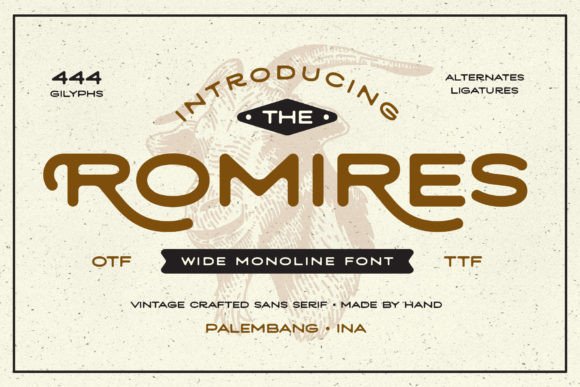
As a small business owner constantly searching for typefaces that bridge the gap between digital design and physical craftsmanship, I find that Romires offers a unique solution for makers who need authentic texture. Introducing Romires as a monoline font with wide letterforms and an inky letterpress effect immediately signals to fellow creators that this is not just another clean digital typeface, but a tool designed to evoke tactile nostalgia. When we create physical goods like stickers, labels, or stationery, using Fonts that carry visual weight and imperfection helps our products stand out in a marketplace saturated with overly polished graphics. This Sans Serif typeface brings a natural, classic touch that feels inherently handmade, making it an invaluable asset for anyone selling tangible creative goods.
Romires Inky Letterpress Effect for Product Packaging and Labels
The specific charm of Romires lies in its ability to mimic traditional printing methods, which is essential when designing packaging for artisanal goods where the unboxing experience matters. As a Sans Serif option among display Fonts, it avoids the coldness of modern geometric styles while maintaining excellent legibility on curved surfaces like candle jars, soap wrappers, and glass bottles. The inky letterpress effect built into the letterforms adds immediate perceived value to your product line because customers associate that slight bleed and texture with heritage quality and small-batch production. For sellers on platforms like Etsy or at local craft markets, utilizing Romires on product labels can transform a simple container into a boutique item without requiring expensive physical printing equipment.
When applying this font to packaging, consider how the wide letterforms interact with different label materials. The monoline structure ensures that even at smaller sizes, the ink-spread effect remains visible rather than turning into mud, which is a common issue with distressed fonts. This makes Romires particularly effective for:
- Skincare and Beauty Labels: Creating a botanical, apothecary aesthetic that suggests natural ingredients.
- Food and Beverage Tags: Adding a farmhouse or rustic bakery vibe to jam jars, coffee bags, and wine bottles.
- Eco-Friendly Packaging: Complementing kraft paper, recycled cardstock, and unbleached cotton tags with appropriate vintage typography.
Designing Readable Stickers and Die-Cut Decals with Romires
Crafters using Cricut or Silhouette machines often struggle with textured Fonts because intricate details can tear during the weeding process, but Romires balances style with cutting practicality. Because it is a monoline Sans Serif, the stroke width remains consistent, providing enough surface area for vinyl adhesion while still delivering that desired old-school design aesthetic. This makes it an ideal choice for laptop decals, water bottle stickers, and planner embellishments where durability is just as important as visual appeal. The wide letterforms also mean there is ample negative space within each character, reducing the risk of internal letters peeling up after application.
For those creating sticker sheets to sell as digital downloads or physical packs, Romires provides a versatile base that appeals to the journaling and scrapbooking community. Its classic touch pairs beautifully with more ornate elements, allowing you to create cohesive sticker sets that feel curated rather than random. Always test cut at your intended size; while the inky effect is robust, extremely tiny text under 0.5 inches may lose some definition depending on your blade sharpness and material choice.
Romires Wide Letterforms for Wedding Stationery and Invitations
Wedding designers seeking a departure from ubiquitous scripts will find that Romires serves as a stunning primary or secondary typeface for invitation suites requiring a timeless yet distinct personality. Unlike delicate serifs that can feel too formal or modern sans serifs that feel too corporate, this font’s wide letterforms and inky texture strike a perfect balance for rustic, boho, or heritage-themed weddings. Using Romires for couple names, venue details, or "Save the Date" headers establishes a warm, welcoming tone before guests even open the envelope. It reads exceptionally well on textured paper stocks like linen, cotton, or handmade paper, where the digital ink effect harmonizes with the physical grain of the stationery.
Beyond invitations, this typeface excels in day-of wedding signage where readability from a distance is paramount. Welcome boards, seating charts, and menu displays benefit from the bold, open structure of Romires, ensuring guests can easily navigate information while soaking in the decorative atmosphere. For printable template sellers, offering designs featuring Romires taps into a high-demand niche for couples wanting DIY options that don't look cheap or generic. The font's commercial utility extends to thank-you cards and favor tags, providing a consistent typographic thread throughout the entire event branding.
Font Pairing Strategies for Printables and Digital Downloads
Maximizing the sales potential of Romires in your digital shop requires thoughtful pairing with complementary Fonts to create balanced, professional-grade templates. Since Romires is a textured, wide Sans Serif, it acts as a grounding element that needs contrast to shine. Pairing it with a flowing, high-contrast script font creates a dynamic hierarchy perfect for wall art quotes, birthday invitations, and social media templates. Alternatively, combining it with a minimalist, thin-line serif can enhance its vintage qualities without competing for attention, making this combination ideal for planner pages, checklist printables, and educational worksheets.
When designing for commercial sale, remember that your customers are looking for versatility. Create mockups showing Romires used in various contexts—perhaps as a bold header on a weekly meal planner paired with a clean body font, or as a standalone statement piece in nursery wall art. Highlighting these use cases helps buyers visualize the font’s value beyond a single project. Additionally, ensure you clearly communicate any included alternates or ligatures, as these features allow users to customize their designs further, increasing the perceived worth of your digital assets.
Commercial Licensing and Brand Identity for Small Business Owners
Before integrating Romires into your revenue streams, understanding the commercial licensing terms is critical for protecting your handmade business and respecting the type designer’s work. Most premium Fonts require specific licenses if you plan to use them on products for sale, especially for physical merchandise like t-shirts, mugs, and tote bags versus end-use digital products like editable Canva templates. Clarifying whether your license covers unlimited physical sales or requires a tiered upgrade prevents future legal headaches and supports sustainable font creation. Always keep your license receipt accessible, as marketplaces occasionally request proof of commercial rights during shop reviews or dispute resolutions.
Beyond legality, consistent use of Romires can become a cornerstone of your brand identity, signaling to repeat customers that they are purchasing from a maker who values craftsmanship and intentional design. Whether you are branding your own shop or offering custom design services to other small businesses, this typeface communicates reliability and warmth. Its old-school design inspiration resonates deeply with audiences tired of fleeting trends, making it a safe yet stylish investment for long-term brand building. By leveraging the unique characteristics of this Sans Serif font, you aren't just decorating a product; you are embedding a story of quality and tradition that customers are eager to support.